How to Reconstitute Peptides Safely (Complete Beginner Guide)
If you’re working with peptide compounds in a research setting, one of the first things you’ll need to understand is how to properly reconstitute them.
Most peptides are supplied in a lyophilized (freeze-dried) powder form. Before they can be handled in a liquid state for research purposes, they must be carefully mixed with a sterile solution.
Done correctly, this process helps maintain stability, consistency, and integrity. Done incorrectly, it can lead to contamination or degradation.
This guide breaks down the fundamentals of peptide reconstitution in a simple, step-by-step format.
What Does Reconstitution Mean?
Reconstitution refers to the process of adding a liquid solution to a freeze-dried substance to return it to a usable liquid form.
In peptide research, this typically involves:
- A lyophilized peptide powder
- A sterile reconstitution solution
- Proper handling tools (syringe, alcohol wipes, etc.)
The goal is to dissolve the powder gently without damaging the compound or introducing contaminants.
What Is Bacteriostatic Water?
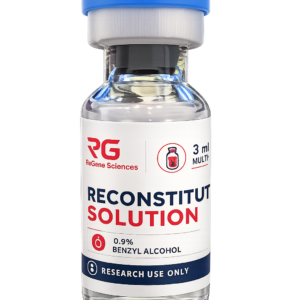
Bacteriostatic water is a sterile solution commonly used in research environments. It contains purified water and a small amount (typically 0.9%) of benzyl alcohol, which acts as a preservative.
This preservative helps inhibit bacterial growth, making the solution more stable for multi-use scenarios compared to plain sterile water.
For researchers looking to maintain consistency and reduce contamination risk, using a properly formulated reconstitution solution for research use is considered best practice.
👉 You can explore a dedicated option here:
https://regenesciences.com (Reconstitution Solution)
Why You Should Not Use Regular Water
Using non-sterile or standard water introduces several risks:
- No antimicrobial protection
- Higher contamination risk
- Reduced stability after mixing
Even distilled water lacks the bacteriostatic properties needed to maintain a sterile environment after initial use.
For that reason, most research protocols favor bacteriostatic solutions designed specifically for reconstitution.
Step-by-Step: How to Reconstitute Peptides
1. Prepare a Clean Workspace
Start with a clean, controlled environment. Wipe down surfaces and wash your hands thoroughly.
2. Gather Your Supplies
You’ll typically need:
- Sterile syringe
- Alcohol prep pads
- Reconstitution solution
- Peptide vial
3. Sanitize the Vials
Use alcohol pads to clean the tops of both the peptide vial and the solution vial.
4. Draw the Solution
Using a sterile syringe, draw the desired amount of reconstitution solution.
5. Inject Slowly
Insert the needle into the peptide vial and slowly let the liquid run down the inside wall of the vial.
Avoid injecting directly onto the powder, as this can damage the structure.
6. Let It Dissolve
Allow the peptide to dissolve naturally. Do not shake the vial.
If needed, gently swirl or roll it between your fingers.
7. Store Properly
Once mixed, store the solution according to general research handling guidelines—typically in a cool, dark environment.
How Much Bacteriostatic Water Should You Use?
The amount of solution used depends on your intended concentration and research protocol.
Because research needs can vary widely, there is no one-size-fits-all answer. Always align your approach with your specific research parameters and documentation.
Storage Tips After Reconstitution
Proper storage is critical to maintaining integrity:
- Keep refrigerated when appropriate
- Avoid repeated exposure to light
- Minimize contamination by using sterile tools
- Do not repeatedly open and expose the vial unnecessarily
Following these practices helps maintain stability over time.
Where to Get Reliable Reconstitution Solution
Not all reconstitution solutions are created equal.
Quality, sterility, and proper formulation play a major role in maintaining consistency—especially in research environments where precision matters.
If you’re looking for a dependable option, consider using a reconstitution solution formulated specifically for research environments.
👉 View a high-quality option here:
https://regenesciences.com
Final Thoughts
Reconstituting peptides is a simple process when done correctly—but attention to detail matters.
Using the right solution, maintaining a sterile environment, and following proper handling techniques all contribute to better consistency and reliability.
Whether you’re new to peptide research or refining your process, taking the time to do it right from the start can make a significant difference.
FAQ Section
How long does bacteriostatic water last after opening?
It depends on storage conditions, but the preservative helps extend usability compared to standard sterile water.
Can you use sterile water instead of bacteriostatic water?
Sterile water lacks antimicrobial protection and is generally less stable after opening.
Why is benzyl alcohol used in bacteriostatic water?
It helps inhibit bacterial growth, improving stability for repeated use.