
On this pagePeptide Scientific Overview
Peptide scientific work now sits at the center of modern biomedicine, analytical chemistry, and translational research. In 2026, researchers use peptides to study signaling, metabolism, tissue repair, immune defense, and targeted delivery systems.
This guide explains what peptide scientific work involves, which research peptide categories receive the most attention, how security verification protects sensitive sequence data, and what to look for in a peptide sciences partner.
Peptide Scientific Overview
“Peptide scientific” refers to the modern study, design, synthesis, testing, and manufacturing of peptides for research and biomedical development. Peptides are short chains of amino acids linked by covalent chemical bonds known as peptide bonds. Peptides typically contain anywhere from 2 to roughly 50 amino acids, while chains containing 2 to 20 amino acids are generally called oligopeptides, and longer chains up to 50 are polypeptides.
Once a chain exceeds 50 to 100 amino acids, it is typically classified as a protein. That boundary can be practical rather than absolute: insulin, with 51 amino acids, regulates glucose metabolism, while oxytocin is involved in social bonding and reproduction. Both illustrate why peptides and small proteins are so important in biological signaling.
Peptides act as chemical messengers, instructing cells about behaviors. Peptides are essential to almost every physiological process and act primarily as the body’s communication and regulatory network. Peptides signal the body to generate new cells, repair damaged structures, and control inflammation. Hormone peptides regulate physiological processes such as metabolism, growth, and reproduction.
In modern medicine, peptides are utilized and are synthesized and studied as therapeutic agents. Peptide sciences bridge basic research and applied therapeutics, from receptor agonists and enzyme inhibitors to vaccine components, peptide-drug conjugates, imaging probes, and peptide–oligonucleotide conjugates. Current hot areas include metabolic regulation peptides, tissue repair peptides, and conjugates designed to improve delivery of nucleic acid medicines.

Best-Selling Research Peptides & Core Applications
Certain compounds repeatedly dominate peptide research orders because they have strong literature support, clear experimental use cases, and interesting biological activity. Research peptides are crafted specifically for investigative purposes and are not intended for direct human consumption or clinical use.
- BPC-157 and TB-500: Commonly researched peptides include BPC-157 and TB-500 for tissue repair. BPC-157 is often studied in tendon, ligament, gut, neural, and bone injury models, while TB-500, a thymosin beta-4 fragment, is explored in cell migration, angiogenesis, inflammation, and recovery research. These compounds appear in in vivo rodent models and in vitro assays involving fibroblasts, endothelial cells, and tissue-repair pathways.
- Collagen and skin research peptides: Peptides are widely researched for their applications in skin health and collagen research, focusing on tissue repair and healing studies. Examples include GHK-Cu and matrix-stimulating fragments used in lab models of extracellular matrix turnover. This work has relevance to cosmetic science, but serious researchers avoid making unsupported cosmetic or medical claims.
- Metabolic and weight-management research peptides: Research on peptides includes their role in metabolic and weight management, with specific compounds like Semaglutide and Tirzepatide being investigated for these purposes. Semaglutide and Tirzepatide are central to GLP-1 and GIP pathway research, appetite regulation, glucose metabolism, and obesity-related rodent models.
- Enzyme-modulating peptides: Peptides can bind to specific enzymes to slow down or block biochemical reactions, helping to maintain homeostasis. This makes enzyme substrates and inhibitors useful in pharmacology, assay development, and disease pathway research.
- Antimicrobial peptides: Antimicrobial peptides disrupt bacterial membranes and form a critical part of the innate immune system. Antimicrobial peptides (AMPs) act as a natural defense system against pathogens such as drug-resistant bacteria, making them an active area in infectious disease science.
- Neuropeptides and sleep research: Neuropeptides transmit signals between neurons and include endorphins, which modulate pain perception and mood. Peptides are also studied for their effects on cognitive performance and sleep regulation, highlighting their diverse applications in scientific research. Orexin-related peptides and melanin-concentrating hormone analogs are part of this emerging niche.
- Quality expectations: The success of experiments involving research peptides hinges on the purity and stability of the resources used. Serious peptide scientific projects depend on high purity, precise sequence verification, and reliable analytical data such as HPLC and mass spectrometry. A good product listing should make sense to a lab scientist, not just a casual shop visitor.
Peptide safety and clinical utility are reviewed by resources such as PBS and WebMD, but research-grade materials should not be confused with fda-approved drugs or clinical products.
Performing Security Verification on Peptide Research Platforms
Security verification is now a normal part of peptide research websites because proprietary sequences, unpublished assay information, API documentation, and custom synthesis request forms can be targeted by malicious bots. A peptide scientific website has to protect researchers without making legitimate access unnecessarily difficult.
When a user lands on a security verification page, there may be a brief pause while the system checks the browser session. The page may show a visual challenge, a background browser check, or a short waiting state. If the security service verifies the user as human, a verification successful message is displayed and access is granted.
A well-designed flow should include:
- Clear language explaining that the website is performing security verification to protect peptide research data and custom order forms.
- Bot protection that screens for a suspicious bot, automated scraping, repeated failed requests, or abnormal traffic patterns.
- Technologies such as CAPTCHA systems, JavaScript-based behavioral analysis, IP reputation checks, session fingerprints, and secure cookies.
- Privacy-conscious settings that distinguish people from automation without collecting unnecessary personal data.
- A visible message such as verification successful so the customer knows why the step appeared.
- Logged security events, sometimes including a respond ray id or similar request identifier, so support teams can investigate access issues.
This kind of security is not only about blocking sketchy traffic. It also supports transparency, protects intellectual property, and helps ensure that a researcher can submit a custom sequence without exposing sensitive work to automated abuse.
Foundations of Peptide Sciences in 2026
Peptide sciences span organic chemistry, molecular biology, pharmacology, materials science, computational design, and quality control. The field connects the basic meaning of a sequence to real biological work in cells, tissues, and animal models.
- Receptor-binding peptides: These include agonists and antagonists that interact with GPCRs, ion channels, growth factor receptors, and hormone pathways. They support research into metabolism, inflammation, reproduction, and signaling.
- Enzyme substrates and inhibitors: Peptides are used to measure enzyme activity, block target pathways, or map biochemical reactions. This is especially useful in protease, kinase, and immune signaling studies.
- Signaling modulators: Many peptides work as messengers that regulate cell behavior. They are studied in wound healing, immune modulation, endocrine biology, and neurobiology.
- Structural peptides: Self-assembling peptides can create hydrogels, nanomaterials, and scaffolds for regenerative medicine and biomaterials research.
- Historical foundation: Solid-phase peptide synthesis, or SPPS, was introduced by Bruce Merrifield in the 1960s and changed the industry. Fmoc chemistry became a major advance in the 1980s and 1990s, while automation, microwave-assisted synthesis, and in-line monitoring improved speed and consistency from 2010 through 2026.
- Modern modalities: Peptide sciences underpin peptide vaccines, peptide-drug conjugates, peptide-based imaging probes, peptide–oligonucleotide conjugates, and targeted delivery platforms.
- Sequence design: Length, charge, hydrophobicity, macrocyclization, stapling, and non-natural amino acids all affect stability, selectivity, solubility, and bioavailability.
Advanced Peptide Synthesis Technologies
Precision engineering and automation have transformed peptide synthesis workflows in analytical and production labs. A sequence that once required slow manual handling can now be synthesized in parallel, monitored in real time, and optimized across multiple conditions.
Modern systems comparable to high-throughput platforms such as PepAxis™-Nova5 are designed to run many sequences at once. The goal is not simply speed. The real value is reproducibility, analytical quality, lower failure rates, and better support for complex peptide scientific projects.
- Microwave-assisted SPPS: Microwave SPPS accelerates coupling and deprotection cycles, often reducing steps from tens of minutes to a few minutes. Shorter reaction windows can also reduce certain side reactions.
- Parallel synthesis: High-throughput synthesizers allow dozens or hundreds of peptides to be created in one workflow, which is useful for epitope mapping, structure-activity studies, and screening libraries.
- Integrated controls: Modern instruments combine automated reagent delivery, temperature control, resin handling, washing, and in-line monitoring to improve batch consistency.
- Green chemistry: Sustainability work includes solvent reduction, DMF recycling, safer reagent choices, and lower-waste purification strategies. This matters because peptide manufacturing can generate a large solvent burden.
- Protecting group strategy: Minimal protection group strategies and orthogonal protecting schemes reduce synthesis steps while preserving sequence fidelity. They are especially useful for cyclic peptides, stapled peptides, disulfide-rich sequences, and modified amino acids.
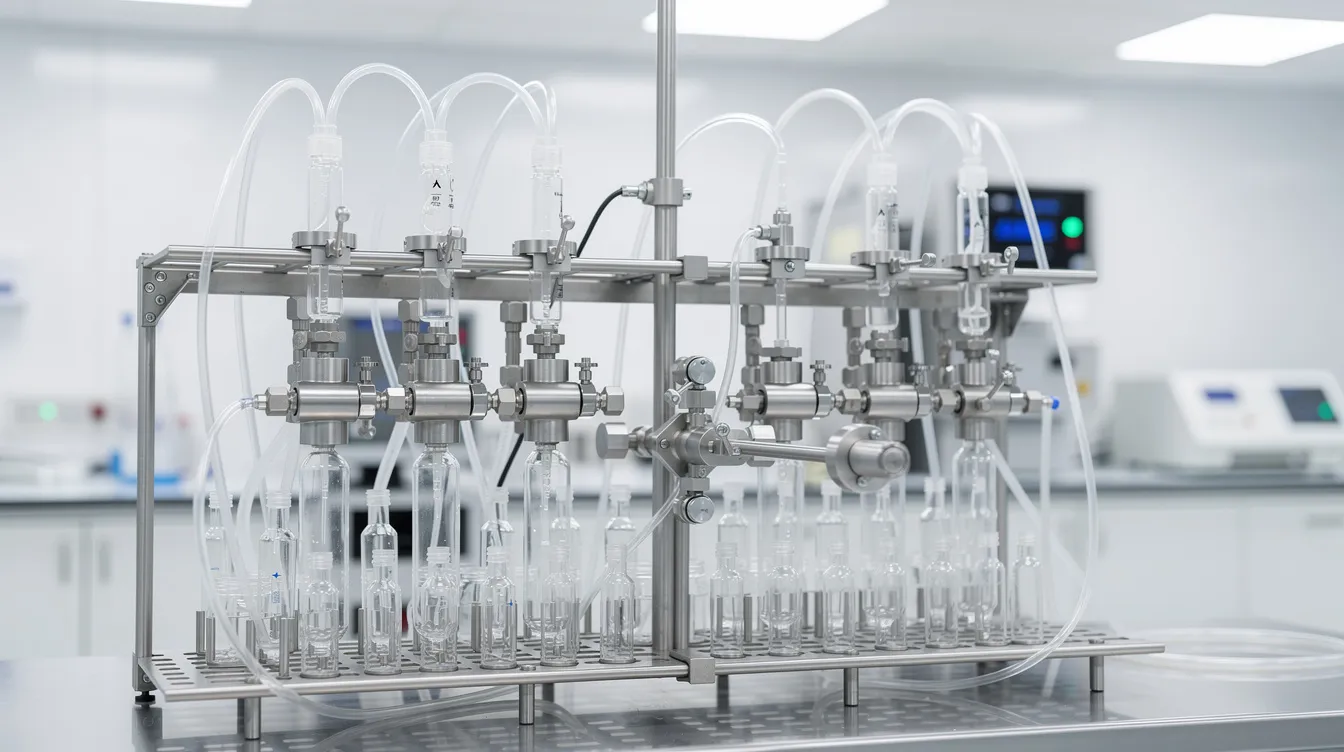
Solid-Phase Peptide Synthesis (SPPS) and Process Optimization
SPPS remains the dominant platform for peptide manufacturing in 2026 because it is flexible, scalable, and compatible with many natural and modified amino acids. It also gives process engineers a clear way to improve yield, purity, and stability one cycle at a time.
- Resin selection: Rink amide resin is used when a C-terminal amide is needed, while Wang resin and related acid-labile supports are used for C-terminal acids. Resin loading, swelling behavior, and cleavage conditions can strongly affect the final product.
- Coupling chemistry: Traditional systems such as HBTU/HOBt are still known, but many labs prefer newer or safer reagent combinations, including Oxyma-based and uronium-type systems. Engineers balance speed, cost, coupling completeness, and epimerization risk.
- Medium-length workflow: A 20–30 amino acids peptide may go through repeated cycles of Fmoc deprotection, washing, activated amino acid coupling, optional double coupling, and another wash. Microwave-assisted workflows may complete coupling and deprotection in a few minutes per step for well-behaved sequences.
- Yield considerations: Crude yield and crude purity depend on sequence length, aggregation, hydrophobicity, steric hindrance, and side reactions. Well-optimized sequences may show strong crude purity, but hydrophobic or aggregation-prone peptides often require additional optimization.
- PAT and scale-up: Process analytical technology can include UV monitoring of Fmoc release, coupling-completion tests, chromatography, mass spectrometry, and batch documentation. For GMP manufacturing, these tools support validated processes, release testing, and reproducible quality.
Integrating Peptide Sciences with Oligonucleotides and Conjugates
Peptide–oligonucleotide conjugates have become a focal point for targeted delivery and gene modulation research. The basic idea is practical: use a peptide to improve where an oligonucleotide goes, how it enters a cell, or how it escapes intracellular compartments.
- Two synthesis routes: One approach is to synthesize the peptide and oligonucleotide separately, then connect them with click chemistry, maleimide-cysteine chemistry, thiol-ene chemistry, or another linker strategy. Another approach is linear synthesis, where one component is grown from the other on a solid support.
- Design goals: POCs are designed for cellular uptake, tissue targeting, nuclear localization, cytoplasmic delivery, nuclease resistance, protease resistance, and improved stability in biological fluids.
- Research areas: Peptide–oligonucleotide systems are being explored for antisense oligonucleotide delivery, siRNA transport, and CRISPR guide RNA delivery using cell-penetrating peptides.
- Therapeutic pipeline relevance: These conjugates are important because many nucleic acid tools have strong target specificity but limited delivery. Peptides can add targeting and transport functions that oligonucleotides do not naturally have.
- Analytical challenges: POCs require combined peptide and oligo mass spectrometry, chromatographic separation, stability testing, and confirmation that both parts of the conjugate remain intact.
- Recent direction: Researchers are also studying peptide-based coacervates and responsive delivery systems that release oligonucleotides inside cells, including ATP-sensitive platforms reported in recent 2026 literature.
From Research-Grade to GMP Peptide Manufacturing
Moving from milligram research peptides to multi-kilogram GMP-grade production changes almost everything. The chemistry may look familiar, but the documentation, traceability, validation, and regulatory expectations increase at every stage.
- Discovery phase: R&D workflows are flexible. Researchers may test multiple sequences, modify amino acids, change solvents, or accept shorter documentation when screening early ideas.
- Preclinical phase: Teams need stronger traceability, more complete analytical reports, stability data, and better impurity understanding.
- Clinical and GMP phase: GMP controls include qualified raw materials, validated cleaning processes, environmental monitoring, controlled batch records, and batch release testing.
- Early planning: Peptide scientific planning should anticipate scale-up constraints such as aggregation, poor solubility, difficult purification, unusual modifications, and low-yielding coupling steps.
Emerging Trends in Peptide Research for 2024–2026
Recent conference themes across the world, including IOPC 2025–2026 and CPHI Americas 2026, show that peptide scientific priorities are shifting toward stability, delivery, manufacturability, and data-driven design. The most interesting work is happening where chemistry, biology, and computational modeling meet.
- Macrocycles and stapled peptides: Macrocyclization and stapling can improve receptor selectivity, protease resistance, and sometimes oral bioavailability. A recent case in dual GLP-1R/GIPR research showed that double biaryl-stapled peptide agonists can improve proteolytic stability, although oral delivery remains challenging. See the related PubMed record on stapled GLP-1R/GIPR peptide dual agonists.
- Oral peptide delivery: Oral peptide delivery remains difficult because digestive enzymes, poor permeability, and rapid clearance all reduce exposure. Oral semaglutide succeeds despite very low bioavailability through formulation support, while newer cyclic peptide work has reported much higher preclinical absorption in select models. A useful overview appears in Nature Communications research on oral peptide bioavailability.
- Stable isotope-labeled peptides: Stable isotope-labeled peptides are indispensable internal standards in quantitative proteomics and regulated bioanalysis. Heavy isotope standards using ¹³C, ¹⁵N, or deuterium help laboratories quantify target proteins with better precision.
- Infectious disease research: After SARS-CoV-2, peptide research expanded around viral entry inhibitors, diagnostic peptide probes, epitope mapping, and vaccine antigen design.
- AI design tools: Computational models now help create peptide binders, predict peptide-protein interactions, optimize cyclic conformations, and reduce the number of failed synthesis attempts.
- Professional context: Groups such as the american peptide society continue to support the field through meetings, education, and discussion of peptide innovation, quality, and scientific standards.
Data Integrity, Security, and Compliance in Peptide Sciences
Laboratory data integrity is central to scientific credibility, publication quality, intellectual property protection, and regulatory compliance. In peptide sciences, the raw data behind HPLC, MS, synthesis logs, and stability studies can be just as important as the final report.
- Electronic records: Electronic lab notebooks, chromatography data systems, and mass spectrometry files should be backed up, access-controlled, and protected from unauthorized edits.
- Secure portals: Web-based ordering portals and project dashboards increasingly incorporate performing security verification to safeguard client sequences, custom synthesis files, invoices, and API documentation.
- Audit trails: Every important change to a sequence file, order sheet, certificate of analysis, or analytical report should record who changed it, when it changed, and what changed.
- Controlled access: Role-based permissions help ensure that a requester, reviewer, lab manager, and customer support team only see the data they need.
- Security assessments: Periodic security reviews, penetration testing, and incident-response planning are part of a mature peptide scientific quality system.
- Trust signals: A verification successful event and a secure user session are small details, but they reinforce a bigger message: the platform values security, transparency, and long-term collaboration with people doing serious research.

How to Choose a Peptide Scientific Partner
Choosing a peptide scientific partner is not just about price or lead time. The right partner should help researchers protect sensitive work, improve experimental reliability, and create a realistic path from early research to scale-up.
- Look for analytical transparency: A strong partner provides a certificate of analysis, HPLC purity data, mass spectrometry confirmation, lot number information, and clear documentation. For complex peptides, additional characterization may be appropriate.
- Evaluate complex sequence experience: Ask about long peptides, hydrophobic sequences, cyclic peptides, stapled peptides, disulfide-rich peptides, non-natural amino acids, and peptide–oligo conjugates.
- Assess technical responsiveness: A serious supplier should be able to discuss resin choice, protecting groups, solubility, stability, purification strategy, and realistic delivery time.
- Check security measures: A client portal should use visible security verification, clear bot protection language, secure sessions, and a verification successful message when access is granted.
- Ask about lifecycle support: The best partners can support discovery, optimization, stability studies, scale-up feasibility, and potential transition toward GMP manufacturing.
- Prioritize innovation and quality: Look for teams that follow green synthesis, advanced SPPS, microwave-assisted methods, parallel synthesis, peptide–oligo conjugation, and modern analytical science.
Peptide scientific work is advancing quickly, but the fundamentals still matter: verified identity, reliable purity, strong stability, secure data handling, and honest communication. If you are planning a new peptide research project, start by defining the sequence, the assay, the required quality level, and the security expectations before you place an order.